Diaspora · Origins · What the records actually show
Why the Roots Lead Inland
Every year thousands of African Americans stand in the dungeons at Cape Coast and Elmina. Almost nobody stands where the people in those dungeons were taken from. The coast was the exit. It was almost never the origin — and that holds whichever stretch of coast your ancestors left from.
The claim, stated precisely
You will read, on a great many sites including an earlier version of this one, that African American ancestry traces to Africa's interior rather than its coast. That is true, and it is important, and it is routinely stated so loosely that it collapses under the first informed challenge.
Here is the precise version, in three parts.
One — coastal peoples were rarely the traded
The societies along the shore were the ones with forts, ports and European relationships. They were brokers, middlemen and, in several cases, states grown powerful on the trade. The people sold through their ports came from behind them.
Two — this holds on every coast, not just Ghana's
From Senegambia the captives came down from the interior. From the Bight of Biafra they were overwhelmingly Igbo, the peoples living inland of the ports at Calabar and Bonny. From the Angolan coast they came from far behind it. The pattern is not a Ghanaian peculiarity — it is the structure of the whole trade.
Three — and it does not make Ghana the main source
This is where most tellings overreach. The inland argument is sound. The conclusion that it points to northern Ghana specifically does not follow, and the shipping records say otherwise. We set that out below rather than around it.
Where the ships actually sailed from
Roughly 12.5 million people were embarked on slave ships across the whole Atlantic trade. Around 10.6 million survived the crossing. These figures come from decades of work assembling surviving voyage records, and they are the best numbers anyone has.
Across the trade as a whole, West Central Africa — the Kongo and Angolan coasts — was the largest single region of departure, sending around 5.7 million people. But most of those went to Brazil, not North America, and this is where the picture has to get specific.
Mainland North America overall
Senegambia and the nearby Atlantic islands were the most common region of origin for captives carried to mainland North America. That is present-day Senegal, the Gambia and Guinea-Bissau — over a thousand miles from Ghana.
Virginia
Origins are known for around 53,000 of the roughly 86,000 people carried in. The largest group came from the Bight of Biafra — dominant in the first half of the eighteenth century, and predominantly Igbo, with Ibibio, Efik and Moko peoples of the Niger Delta. Senegambia and West Central Africa became more common from the late 1720s.
Maryland
Origins known for just over half. Most numerous were captives from Senegambia, followed closely by West Central Africa. In sharp contrast to neighbouring Virginia, the Bight of Biafra accounted for only about 12 per cent against Virginia's 43.
New England
Here the Gold Coast does lead — just over half of those whose origins are known. But the absolute numbers are small: around a thousand people, in a region that imported a fraction of what the southern colonies did.
One complication worth knowing. A significant number of people reached mainland North America not directly from Africa but reshipped from the Caribbean — and those reshipment flows had different origin profiles. In one sample of people reshipped from Jamaica to the mainland between 1751 and 1775, the Gold Coast accounts for around a third. So Ghana's contribution to African American ancestry is real, and part of it arrives by an indirect route that the direct-voyage figures understate.
Why the coast was the exit, not the origin
Now the part that survives all of the above intact, and is the actual argument of this page.
Whichever region your ancestors were shipped from, they were with high probability not from the port town. They were from behind it.
- The evidence is in the ethnic labels themselves. The people shipped in vast numbers from Old Calabar and Bonny were Igbo — the majority population living inland from those ports. The ports were run by Efik and Ijaw traders who were not the ones being sold.
- Capture required a frontier. You cannot raid your own town. Captives came from war, raiding, judicial enslavement and debt — all of which happened at the edges of a polity's power, which is to say inland of the coast, in the direction of somebody else.
- The coastal states had a business model. Asante, Dahomey, the Efik houses of Calabar, the states of Senegambia — these were the brokers. Their interest was in supplying, not being supplied. Several of them fought wars specifically to control that role.
- The infrastructure points inward. The market towns, the holding camps and the caravan routes all sit in the interior and run seawards. In Ghana that means Pikworo, Salaga, Kintampo, Kete Krachi and Assin Manso — a documented chain running from the far north down to the castles.
- And the destination of the profit points outward. Wealth accumulated on the coast and in the forest kingdoms. The regions that supplied the people kept almost none of it, and are today the poorest parts of every country involved.
So the standing-in-the-dungeon experience, powerful as it is, shows you a door rather than a home. The home was several hundred kilometres inland, and in most cases nobody has ever put up a sign there.
The Ghana question, honestly
This is a Ghanaian website and we are about to argue against our own commercial interest. That is the point of the site.
Ghana is not where most African American ancestry leads. If you are African American, the shipping records make Senegambia, the Bight of Biafra and West Central Africa collectively far more likely origins than the Gold Coast. Any site telling you that a trip to Ghana is a trip to your ancestral homeland is telling you something the evidence does not support.
What is true is narrower and still meaningful:
- Some African American ancestry does lead to Ghana — directly, and via Caribbean reshipment where the Gold Coast share was substantially higher.
- Ghana holds the best-preserved physical evidence of the trade anywhere on the continent — around forty forts and castles along a few hundred kilometres of coast, several UNESCO-listed.
- And Ghana has the inland chain intact — Pikworo, Salaga, Assin Manso — which almost no other West African country has mapped, preserved and made visitable.
Which is to say: Ghana is not necessarily where your family came from. It is the best place in Africa to understand what happened to them. Those are different claims, and only one of them is defensible.
So why does Ghana dominate diaspora travel?
A fair question, given the above. The answer is history and policy rather than ancestry.
Nkrumah and Pan-Africanism
Ghana was the first sub-Saharan colony to gain independence, in 1957, and Nkrumah made it the centre of Pan-African politics. W.E.B. Du Bois moved here, took Ghanaian citizenship and is buried in Accra. That made Ghana the diaspora's political home long before it was a heritage destination.
Language and stability
English-speaking, politically stable through several peaceful transfers of power, and straightforward to travel in. Compare the practical difficulty of heritage travel in much of the rest of the region and the concentration explains itself.
The castles are still standing
Elsewhere the physical infrastructure of the trade has been demolished, built over or lost to the sea. Ghana's survived, was restored and was UNESCO-listed. You cannot build heritage tourism around a site that no longer exists.
Deliberate policy
The Year of Return in 2019 and its successor campaigns were a state project, marketed hard and successfully. It brought real visitors, real investment and real returnees — and it also propagated the loose claim that Ghana is the ancestral homeland of the African American diaspora, because that claim sells flights.
None of this is a reason not to come. It is a reason to come knowing what you are looking at.
What a DNA test can and cannot tell you
Commercial ancestry tests are how most people now approach this question, and they are genuinely useful within limits that the marketing does not emphasise.
What they do reasonably well
Broad regional assignment — West Africa versus Central Africa versus Southeast Africa — is reasonably robust. So is identifying that you have ancestry from several distinct regions, which almost every African American does, because the trade mixed populations thoroughly.
What they do badly
Ethnic-group-level precision. A result naming a specific people is comparing your DNA to a reference panel of living members of that group, and modern populations are not eighteenth-century populations. Reference panels for much of West Africa are thin and uneven, and results shift when companies update them.
Why results change
If your estimate moved from one country to another between updates, nothing about you changed. The reference data did. Treat any single result as one estimate rather than a finding.
The borders problem
Modern national borders were drawn in Europe in the 1880s and cut straight through the peoples involved. A result naming "Ghana" and one naming "Togo" or "Burkina Faso" may be describing the same population. The Kassena of Paga live in two countries because of a colonial line.
The honest summary: a test can tell you roughly which stretch of Africa, and it cannot tell you which village. Anyone offering you a village is selling something.
If you are tracing roots
- Start with the American records, not the African ones. Census, wills, plantation inventories, Freedmen's Bureau records, church registers. The documentary trail is far richer on the western side of the Atlantic and it can often get you to a port of arrival and a period, which narrows the African end considerably.
- Learn which port of arrival, and when. Origin profiles differed sharply by colony and by decade — Virginia in 1720 is a different answer from Maryland in 1760. This is the single most useful thing you can establish.
- Use the voyage databases directly. The assembled slave-voyage records are public and searchable, and they will tell you more about probable origins than any commercial test.
- Hold DNA results loosely and get more than one if you can. Compare the regions rather than the country names.
- Accept that the individual link is usually unrecoverable. The people being counted were recorded as cargo. Names, villages and languages were not written down. This is not a failure of your research; it was a design feature of the system.
- And go inland when you travel. Whatever coast your ancestry points to, the origin lies behind it. In Ghana that means Pikworo before Cape Coast, and running the route north to south rather than starting at a castle.
There is a version of diaspora travel that ends at a dungeon door and a photograph. There is another that starts three kilometres from a crocodile pond in the far north, at a rock field with eating bowls cut into it, and works south the way people walked. The second one is harder to arrange and nobody sells it as a package.
It is also the actual story.
Connected reading
- The Inland Slave Routes of Ghana — the routes, the market towns, and why abolition in 1874 did not close them.
- Pikworo Slave Camp — where the northern chain begins.
- Visiting Pikworo — how to actually get there.
- Salaga Slave Market — the northern hinge of the trade.
- Assin Manso — the last wash before the coast.
- Forts and Castles of Ghana — the door, and forty others like it.
- The Kassena, and the Crocodiles — a people split by a colonial border, and named by their raider.
- Beyond the Pond — the northern circuit, sorted by distance.
- Ghana-Net.com — the main portal. Publishing on Ghana since December 2000.
Practical details last verified . Embarkation and survival totals, regional shares and colony-level origin profiles are drawn from the assembled transatlantic slave-voyage records and the published analyses built on them, including the intra-American reshipment data. Origins are known for only a proportion of captives carried to each colony — roughly two-thirds for Virginia, just over half for Maryland, and under a quarter for New England — and all percentages should be read as applying to that documented subset rather than to the whole. Regional definitions follow the standard voyage-database boundaries, in which the Gold Coast runs to and includes the Volta. Commercial DNA ancestry estimates depend on reference panels of living populations and are revised as those panels change. All photography © Remo Kurka. Usage strictly by prior authorisation only.
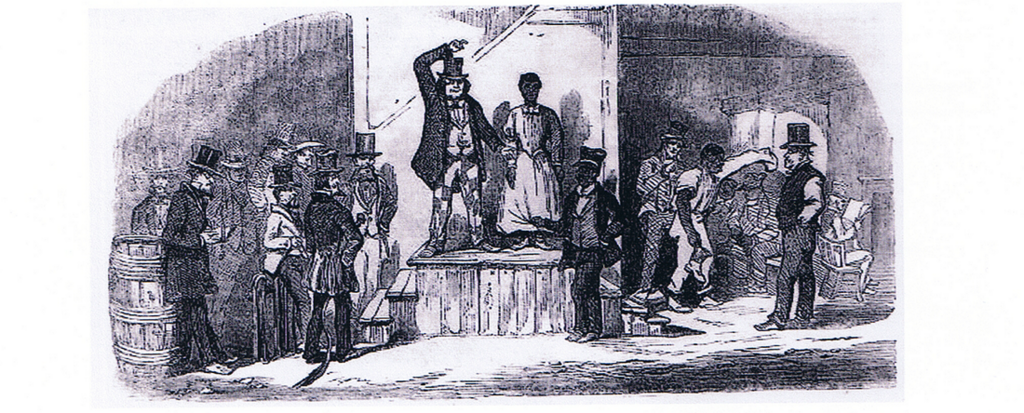
Black Friday! The origin of "Black Friday" is thought to relate to Friday Slave markets! Another batch of slaves traded!