
Burkina Faso and Upper East, Ghana border (c) Remo Kurka
Upper East Region · Paga · The Ghana–Burkina Faso frontier
The Border Market
Most visitors treat this as ten minutes of colour between the crocodile pond and the car. It is nothing of the kind. Paga is Ghana's busiest informal trade crossing, moving hundreds of millions of cedis a quarter that appear in no national trade figure — and the road north of it has become genuinely dangerous.
The scale of it
The Ghana Statistical Service publishes a report on informal cross-border trade — the unrecorded commerce moving across Ghana's land frontiers with Burkina Faso, Togo and Côte d'Ivoire. The figures for Paga are not what most people expect from a border town of this size.
GH¢168 million out, GH¢116 million in
In a single quarter, October to December. That makes Paga Ghana's most active informal trade corridor — not one of them, the most active.
GH¢7.4 billion nationally
Total informal trade across all Ghana's land borders in that period, equivalent to 4.3 per cent of the country's entire trade value. This is not a fringe activity. It is a substantial pillar of Ghana's regional commerce that exists almost entirely outside the official accounts.
The Upper East dominates
The region recorded the highest informal export activity in the country — fifteen times higher than the least active. Seven of Ghana's ten most-used export borders are here: Paga, Namoo Doone, Belimtagna, Kulungugu, Chamataa, Gentiga No.1 and Tambalugu.
Now hold that against the other statistic
The Upper East is, by every development indicator Ghana publishes, among the poorest regions in the country. It is also its busiest trading frontier. Those two facts sit together and neither one is a mistake.
How it works
From early morning to late evening the border moves. Motorbikes, tricycles and pickup trucks carrying food, livestock, cooking oil and textiles, in both directions, continuously.
Two currencies operate side by side — the Ghanaian cedi and the West African CFA franc — and the exchange happens in the market itself, in cash, at rates negotiated on the spot. Several languages run in parallel: Kasem on both sides of the line, plus Hausa as the trade language, Mooré from the Burkinabè side, French, English, and whatever else the transaction requires.
That linguistic ease is not incidental. The Kassena live on both sides of this border, which was drawn by Europeans in the 1890s straight through the middle of one people. The Kassena king lives at Tiébélé, in Burkina Faso. Families cross to attend funerals. What looks to a visitor like international trade is, to a great many of the people doing it, local commerce that happens to involve a customs post.
The wider picture has shifted recently. Political tensions between Burkina Faso and Côte d'Ivoire led Ouagadougou to divert a substantial volume of its import and export trade away from the port of Abidjan, and much of it has moved to Ghana's ports at Tema and Takoradi. Ghana was Burkina Faso's largest African supplier in the last quarter of 2025, at around US$199 million. The Tema–Ouagadougou corridor has become a vital artery for a landlocked country — and Paga sits on it.
Why none of this shows up
"Informal" here does not mean illegal, and it certainly does not mean small. It means the transaction is not captured in the customs record — a woman moving three sacks of onions on a tricycle is trading, and nothing about that appears in a national statistic.
The consequences are real:
- Policy is made from the wrong numbers. If GH¢284 million a quarter moves through one crossing and none of it registers, every calculation about what the Upper East economy is worth is wrong by a wide margin.
- The traders are largely women, and largely unbanked. This is a cash economy with no credit, no insurance and no legal recourse when a load is lost.
- Infrastructure follows recorded activity. Roads, storage, cold chain and market facilities get built where the figures justify them. Paga's figures do not exist, so neither does the investment.
- And it is the household economy. In a district with one rainfed growing season and few cash opportunities, this trade is how a great many families pay school fees.
That the Ghana Statistical Service now measures it at all is a significant improvement. It has been going on, at this scale, for a very long time.
Visiting the market
This is a working market, not a tourist one, and the difference governs how you should behave in it.
- Go early. Mornings are when it moves. By the middle of the day the heat has flattened everything and the trading has thinned.
- Ask before photographing anyone. Traders here are working, some are moving goods they would rather not have documented, and a camera in the face is an intrusion. Accept a refusal immediately.
- Do not photograph the border post, customs, immigration or any uniformed personnel. This is a functioning international frontier with a live security dimension. Pointing a lens at it will end your morning badly, and reasonably so.
- Buy something. The most straightforward way to be welcome in a market is to be a customer. Prices are negotiable and haggling is expected, within reason.
- Carry small notes in cedis. CFA circulates but you do not need it unless you are crossing.
- Watch your bag as you would in any crowded market anywhere. Nothing specific to Paga; ordinary sense.
- Take someone local. A guide from the town will get you a completely different market — introductions, explanations, and the difference between watching and being shown.
The frontier, honestly
Everything above describes the Ghanaian side, where the market is and where visitors go. North of the line is a different subject, and no honest travel page can leave it out.
On 14 February 2026, an attack at Titao in northern Burkina Faso killed eight Ghanaian tomato traders and transporters. These were people doing exactly the trade described on this page.
The two governments have responded, and quickly:
- 20 February 2026 — the thirteenth session of the Ghana–Burkina Faso Joint Cooperation Commission adopted seven legal instruments covering transport, transit and mutual recognition of driving licences among other areas.
- 5 August 2026 — Ghana's Foreign Minister Shirley Ayorkor Botchwey and her Burkinabè counterpart Karamoko Jean-Marie Traoré signed an accord in Accra establishing a joint mechanism to secure the Tema–Ouagadougou corridors, covering terrorism, banditry and trafficking, with joint patrols on exposed stretches and an intelligence coordination centre.
- 11 August 2026 — a Defence Cooperation Agreement was signed by Ghana's acting Defence Minister Cassiel Ato Forson and Burkina Faso's Major General Célestin Simporé, providing for armed military escorts for transit convoys through identified high-risk zones.
Read that last one plainly. Two governments have agreed that commercial lorries on this route may require soldiers travelling with them.
This does not describe Paga town or the market. The Ghanaian side is calm, the trade is booming, and the security agreements exist precisely because both countries want the corridor to keep working. What it describes is the road beyond the frontier, in a country dealing with a Sahelian insurgency. The distinction matters and we are not going to blur it in either direction.
Should you cross?
Physically, crossing at Paga is simple. The post is in the town and the formalities are ordinary.
Whether you should is not a question a travel website is qualified to answer for you, and any site that gives you a confident yes or no is overreaching. What we will do is tell you what to check and where.
Check your own government's current advice
Not ours, not a blog's, not a tour operator's. Foreign ministry travel advice for Burkina Faso is updated continuously and differs by region within the country. Read the one for your own nationality, dated, before you plan anything north of Paga.
Check your insurance
Most travel policies void cover entirely for countries or regions under an official advisory against travel. If you cross without checking, you may be uninsured for everything that follows, including medical evacuation.
Understand that conditions vary sharply by area
Burkina Faso is a large country and the security picture is not uniform. Advice that applies to the north and east may differ from the area immediately across this border. Read the detail rather than the headline.
And note what you would be going for
Tiébélé, the Kassena royal court with the most celebrated painted compounds in West Africa, lies not far north of here. It is genuinely one of the great sights of the region. That is a real reason to want to cross, and it is not a reason to skip the checks above.
There is also a straightforward alternative. The same Kassena architectural tradition exists on the Ghanaian side, in the villages around Paga and Navrongo, and almost nobody asks to see it. Take a local guide and go and look. See savannah walks and village tours.
Getting there
The market is the town
Paga's market is at the frontier in the centre of town, a few minutes from the crocodile ponds and about three kilometres from Pikworo. Once you are in Paga you are there.
From Bolgatanga
The practical base — a short run south, with regular trotros and shared taxis through the day, and the last banks and ATMs you should rely on. Draw cash there.
The right order for a day
Market first thing while it is cool and busy, Pikworo mid-morning, the ponds late morning, villages in the afternoon, Navrongo Cathedral on the way back. See the Paga day plan.
From further afield
Fly Accra to Tamale and travel north from there rather than driving the length of the country. Our public transport page covers how this actually works.
Connected reading
- Paga — the town in a day, and how the pieces fit.
- The Kassena, and the Crocodiles — the people this border cuts in half, and the king who lives on the other side of it.
- Pikworo Slave Camp — three kilometres west, and an older kind of traffic across this same frontier.
- The Paga Crocodile Ponds — the reason most people come.
- Savannah walks and village tours — Kassena compounds on the Ghanaian side.
- Navrongo Cathedral — on the road back to Bolgatanga.
- Beyond the Pond — the whole district, sorted by distance.
- Ghana-Net.com — the main portal. Publishing on Ghana since December 2000.
Practical details last verified . Informal cross-border trade figures are from the Ghana Statistical Service Informal Cross-Border Trade report covering the October to December quarter, which recorded GH¢168 million in informal exports and GH¢116 million in imports through Paga, against GH¢7.4 billion nationally, equivalent to 4.3 per cent of Ghana's total trade value. Bilateral trade figures are from Burkina Faso's National Institute of Statistics and Demography for the fourth quarter of 2025. The attack at Titao on 14 February 2026 in which eight Ghanaian traders and transporters were killed, the Joint Cooperation Commission of 20 February 2026, the corridor security accord of 5 August 2026 and the Defence Cooperation Agreement of 11 August 2026 are all reported in Ghanaian and regional media. Security conditions in Burkina Faso change rapidly; this page is not travel advice and readers considering crossing should consult their own government's current guidance and their insurer before travelling. All photography © Remo Kurka. Usage strictly by prior authorisation only.
Here, trade isn’t just economic — it’s a living exchange of language, tradition, and identity.
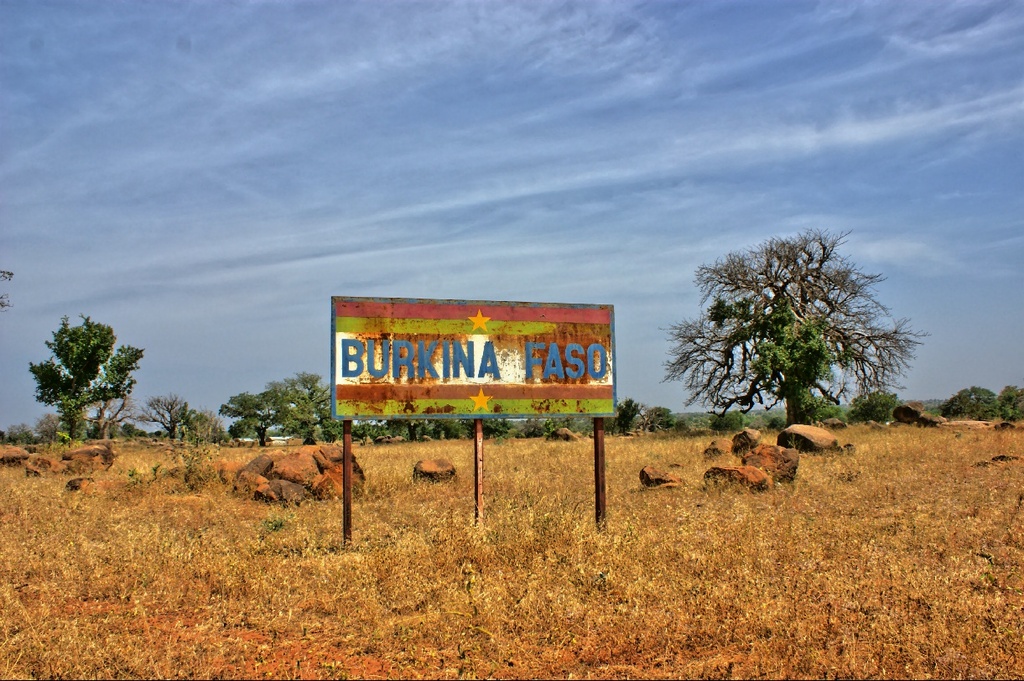
Welcome to Burkina Faso, signboard Burkina - Ghana border (c) Remo Kurka

Traditional Northern Ghana and Burkina Faso dress, hand made Upper East (c) Remo Kurka
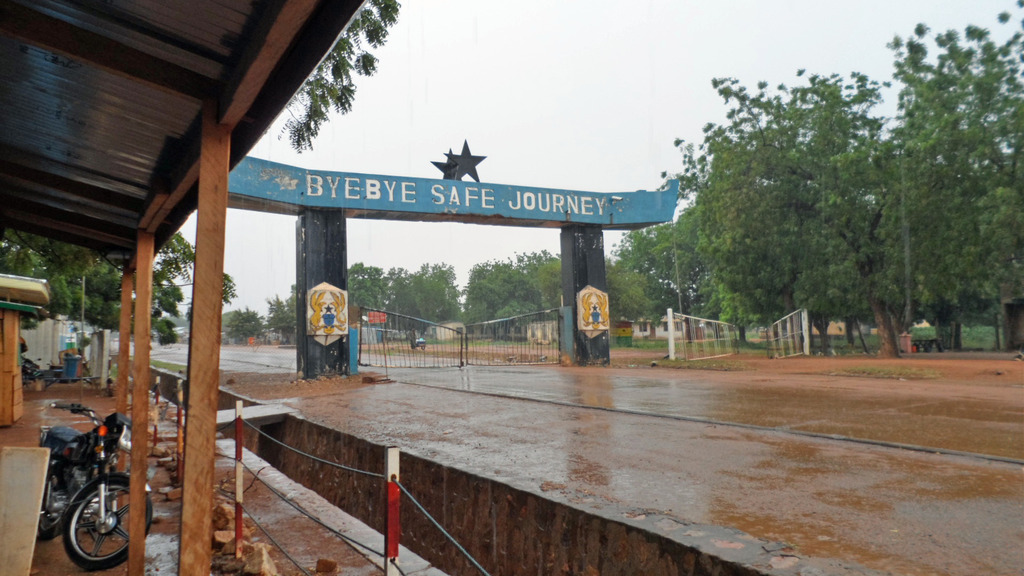
Paga border to Burkina Faso. The people around speak the same language and belong even to the same tribes, very often. Colonial powers divided!